

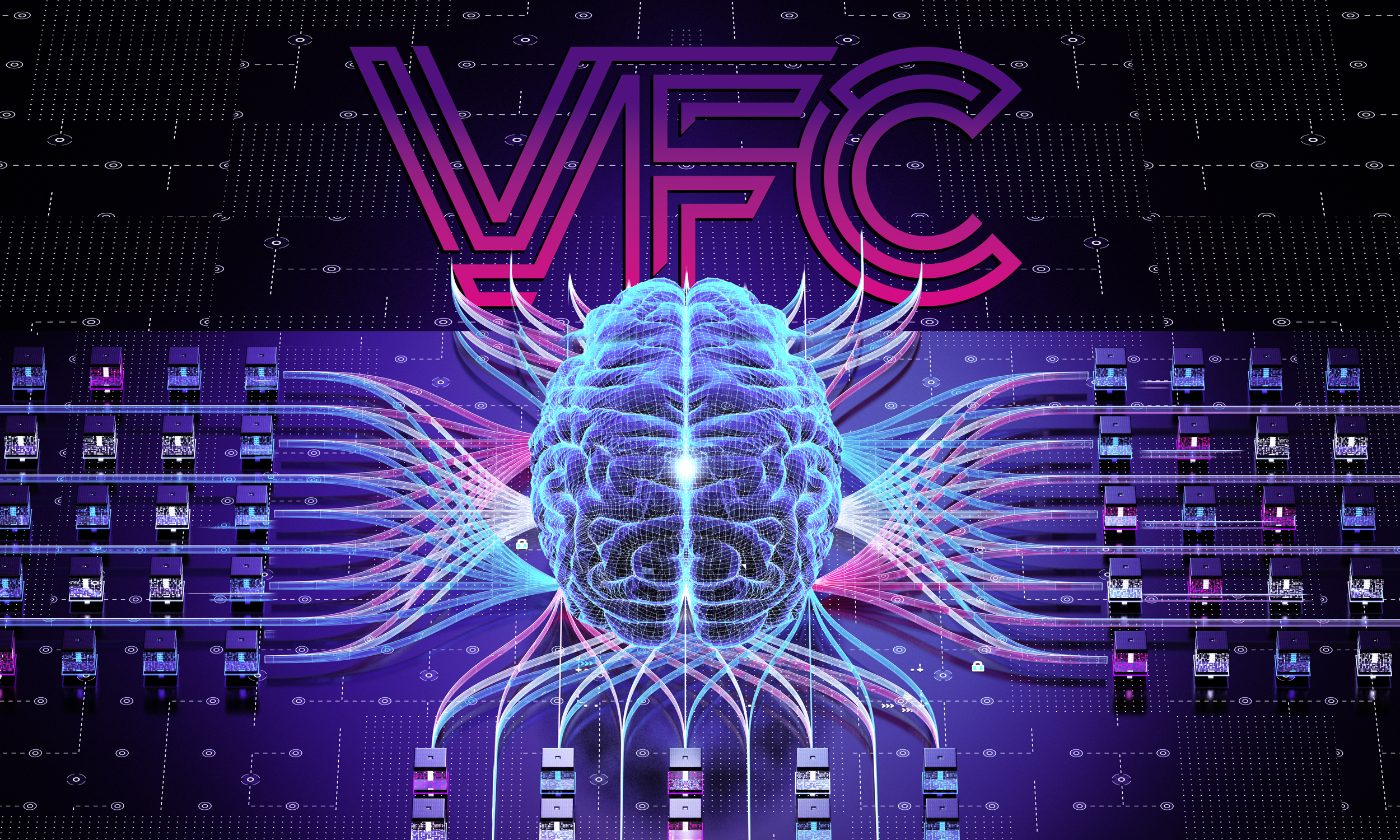

AI and the Democratization of Mediocrity
In the last few years, artificial intelligence for public use has sprinted from novelty to necessity, from curiosity to coworker. Almost everyone who earns a living by thinking or creating is now being forced to prove they still can.
It’s is a big deal! We are literally telling machines what to do, and they are literally doing it.
AI now writes, illustrates, codes, researches, edits, summarizes, translates, and participates in nearly every creative profession. The pace of change is astonishing and, for a firm rooted in strategic creative development, ignoring it would be irresponsible. Using it without standards would be letting the tractor choose what to plant because it moves faster than the farmer.
VFC needs a policy, even if that policy must evolve with the technology. Ours begins here: AI can assist the process, but it cannot own the decision.
The question is no longer whether AI will become part of our work. It already has. The question is whether we remain the editors, curators, engineers, and final decision makers.
We believe AI delivers its greatest value when paired with human judgment. As the technology improves, the human contribution may become more refined, but it will not become less important. Someone still needs to understand the objective, assemble the big picture, recognize what matters, and take responsibility for the result.
Calculators didn’t replace accountants, Photoshop didn’t replace designers, CAD didn’t replace architects, and spreadsheets didn’t replace CFOs. AI may replace coding, copywriting, and production design, but it will not replace the engineers, editors, and strategic brand leaders responsible for judgment, direction, and outcomes.
Like any powerful tool, artificial intelligence raises the floor. It does not automatically raise the ceiling.
— AI will not eliminate expertise. It will increase the value of people who know what good is.
”…AI slop is not slop because AI made it. It is slop because nobody cared enough to edit it.
Who Made This Mess?
The concern for VFC and other professional content creators (read; commercial artists, designers, and writers) is not that people have access to AI. Democratized tools can be helpful to us and to our clients. The concern is the wave of unedited, unconsidered output being unleashed by people who confuse generation with creation.
As we all surely know by now, this flood has been lovingly nicknamed “AI slop.”
To be crystal clear, AI slop is not slop because AI made it. It is slop because nobody cared enough to edit it.
Artificial intelligence is accessible to nearly anyone, just as design, writing, photography, and publishing software have become accessible to nearly everyone. But access to a tool has never guaranteed the ability to use it well.
The communications field has always been equal parts art and science. The science includes research, positioning, audience analysis, structure, language, production, distribution, and measurement. The art includes instinct, originality, restraint, timing, empathy, and taste. AI can participate in the science. It can even imitate aspects of the art. What it cannot do is assume responsibility for whether the work is strategically right, emotionally honest, visually appropriate, or worth putting into the world.
— Using AI for strategic marketing requires the same thing every other creative tool requires: experienced human beings who can distinguish an interesting possibility from a finished idea.
“I Could Do That”
People who treat AI as the end rather than the means are like the uninitiated museum goer who studies a Rothko and confidently announces, “I could do that!”
They could acquire the paint, brushes, and canvas. They could make a large rectangle in a compelling color. Maybe they might even produce something attractive enough to hang over the sofa.
What they could not reproduce is the lifetime of decisions, instincts, influences, discipline, failures, and taste that produced the original.
The same is true in branding, writing, design, and campaign development. The visible result is only the surface. Behind it are questions the audience may never see:
Why this idea? Why these words? Why this image? Why this audience? Why now? What should someone understand, feel, remember, or do next? How does this expression connect to the larger brand? What happens when it moves from a screen to a sign, a sales presentation, a video, a website, or a conversation?
— AI can generate options. VFC expertise determines which options deserve to survive.
How VFC Uses AI
We use AI every day.
It has made us faster, more curious, and more willing to explore ideas we might once have abandoned too early. It can ask useful questions, surface patterns, organize information, challenge assumptions, and occasionally produce a genuine surprise.
Artificial intelligence has earned a place in the VFC process.
But every meaningful decision still belongs to our creative directors, art directors, production artists, strategists, and editors. We determine the objective. We evaluate the work. We refine the idea. We protect the brand. We remain accountable for the outcome.
AI is a useful collaborator, but it does not replace VFC’s judgment or our ability to conceive and execute complex creative campaigns with precision.
The machine can make almost anything. Knowing what should be made, how the pieces should fit together, and how the finished idea should meet the world is still the job at VFC.
Artificial intelligence is an extraordinary tool for humans but tools have never replaced craftsmanship and never will… They amplify it, expose it, or diminish it, depending entirely on the hands that hold them.
Backed by years of solid agency experience,VFC is an innovative and energetic team of award-winning copywriters, designers, illustrators, photographers, videographers and programmers prepared to grow your brand and your business. VFC delivers strategic marketing, advertising and public relations campaigns for a diverse roster of clients from a 170-year-old, high-tech renovated farmhouse in the heart of Chester County, Pennsylvania. For more information call 877-GROW ART or visit VFC on the web at www.virtualfarm.com.
